
Preservation Vs Exploration

January 27, 2025
What’s Happenin’
● Check your email. USAF dues and insurance surcharge for 2026 are due.
● It’s Gametime! Super Bowl / Potluck Party at ASNJ Sunday, February 8, 6:30 pm to the end of the game. Join us for a fun evening! Wear your favorite team gear!
● Wednesday, February 11, 7:00-8:30 pm -- Shihan Lehrman will teach.
● Trip to Aikido of Red Bank, Saturday, February 28. Take the 10:00am class at Jim Soviero Sensei’s new location. We will leave ASNJ parking lot at 9am sharp.
● Hakama Class – open to 3rd Kyu and above – Sunday March 29 – 11am - noon. Teachers meeting to follow. Judo class is cancelled.
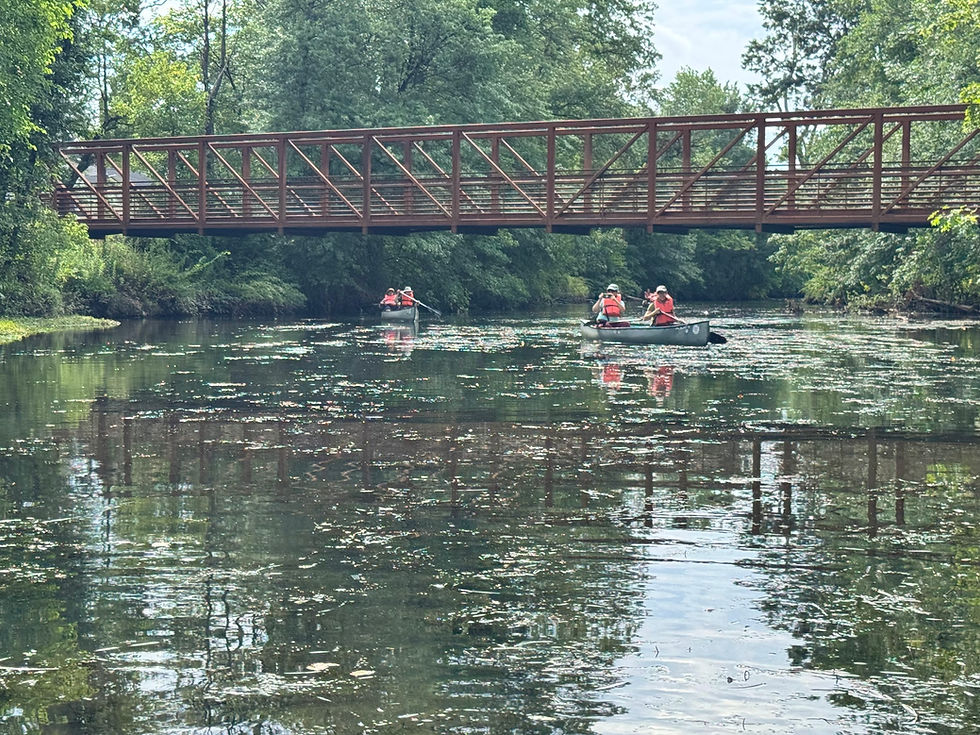
● Friday, July 17, Camp Riverbend at ASNJ, we need people to help teaching the class.
Now and Them
No typo, this is about Now and Them (not then). Keep reading.
There was an interesting discussion after class. I think some of the most interesting lessons are the 30 minutes after class just hanging out and shooting the breeze (Where did that idiom come from? Why would anyone have malice toward wind? Certainly not a sailor. And if a breeze is ‘easy conversation,’ why shoot it?) When I teach, there is little talking during class. It happens later on the couches (no Freudian stuff here) after hakamas are folded as we sit with a soda or beer and maybe some leftover pizza (raiding the fridge after class is standard procedure) . It was during this time that someone asked about a difficulty they had with their uke one evening and wanted to know why their technique didn’t work and what to do.
I answered that technique is an general concept about what to do at that very moment. You need to figure out how to throw that particular uke at that particular moment in what particular throw. Again, not just that person but that person at that moment with which throw. We all change from moment to moment, day to day. It may be different the following day or the following attack. What works for that uke at that time in that way may not work on someone else.
The idea is to work on various adjustments of the technique and see how your uke responds. How it will be different on the inside vs outside. Is your partner leaning forward or back, left or right? In our practice, we need to explore each of these options and learn how they work -- good or bad. Not just this time but each time anew. Practice with each uke like you have never practiced with them before. This is also why seminars are great. You actually get to practice with people you never have practiced with before, no prior knowledge, no history. You can learn more variations from a new instructor that you may not discover at your own dojo.
Discover and understand what works with whom and why. When an uke is difficult, that is your opportunity to learn. Practice and try to find a solution. Don’t blame uke. It’s about now and it’s not about them.
Teen Movie Night
It was a great evening, at least that was what I heard. Adults were not invited. The PTA invited the kids. I was sort of invited; I voluntold myself to be there (is that possible?). I chaperoned which means I, and a couple of parents who voluntold themselves to be there as well, sat cramped in my office with the door closed. All the while, some great kids enjoyed dojo-provided pizza, snacks, and soda to watch a great movie, Kubo and the Two Strings. Afterwards, I regained feeling in my legs out when Rachel picked me up to eat a delicious dinner at Ambeli’s, the best Greek restaurant in NJ.
Great night? The dozen teens really enjoyed the evening and that made the evening for us 5 adults (trying to be unobtrusive while waiting quietly in my -not- spacious office) worth it.
Truly, the important part was the kids had a great time, met new friends (or became better friends), and had an evening where the dojo was all theirs (experientially, there were five cramped adults pretending not to be there). They experienced ownership of their dojo.
At ASNJ, we put a lot of energy into our Kids’ programs (Plural on purpose. We have classes for ages 4-6, 7-10, teen, as well as for home schooled kids and programs for bullying prevention, adaptive Aikido and our Junior Deshi program.).
Back to the movie night: The evening started at 4:30 pm after everyone was gone from the last class of the day. I sat the kids down before turning over the metaphorical keys to them and laid out the ‘rules’ as follows:
You are not allowed to:
(1) Die,
(2) Cause or incur any major injury like a broken bone (“Are dislocations allowed?” one young teen asked. I thought about it but decided the answer was “No.”),
(3) No cell phones (This gave a couple of them second thoughts. I saw them eyeing the door considering if they could make a break for it.),
(4) If there a significant issue arise, they must get me.
(5) If someone needs to leave, let me know immediately and, finally,
(6) Whatever mess they make, they must all clean up (One teen said “Ahhh, that explains why we can’t break someone’s arm!” – I love our teens.).
One teen asked, “Can we shave the head of another teen” while looking at the now-panicked teen next to him. I repeated the 6 Rules. After half a dozen more questions like this, I was starting to second guess hosting the evening (and eyed the door considering if I could make a break for it.) After a very vocal sigh, I retired to my office to wait with the co-chaperoning parents.
2 ½ hours later, it was 6:30, I emerged from my office and told them it was time to clean up. By 7:00, the dojo was restored to its normal state. I thought I saw a clump of hair rolling across the mat. I wasn’t going to ask. Parents came to pick their children up, thanking us for a free evening. The most common question I was asked was “when they can do this again?” From both the parents and the teens. BTW, dinner at Ambeli’s was great. Thanks for asking. And no deaths, mangled limbs or haircuts (at the dojo or the restaurant unless you wanted to consider the octopus limbs, so tender?) Just a group of happy kids showing pride in their dojo and helping each other learn Aikido. And sorta watching a movie.
Get Your Hands Dirty
The ASNJ Women’s Committee hosted a pottery painting event on Sunday, January 11 at 5pm at Fire Me Up in Cranford NJ, a local pottery studio. Nineteen female members, relatives of members, former members, friends or anyone 11 or older attended. Thanks to the Women’s committee, especially Alice, who chaired the event, and Thu, who (that rhymes) helped her coordinate. ASNJ provided adult beverages and snacks, and art experience was NOT required. No pots were injured during the making of this event.
The funny thing was after this event; Rachel and I had dinner at Ambeli’s in Cranford -- just down the block from pottery place. We were joined by Alice and Thu to thank them for their hard work. Did I mention the octopus is amazing with or without painting pottery?
A Breath of Fresh Air
I was given a very clear and specific lesson on breathing by my Tai Chi Chuan teacher. He received this lesson from his teacher and he from his. Nothing new in this.
And….. For just a small fee of $1,549.99, you, too, can learn this lesson. Just log onto my YouTube home study course (please don’t, there is none). But seriously, have you seen the Tai Chi Chuan advertisement from incredibly muscular Asian man who claims to be over 60 with a body any gym rat would be jealous of and only practices Tai Chi Chaun for 7 minutes a day to achieve this amazing physique? He will happily sell you the secret. What is the secret? Don’t pay him anything either. I will give you one of the greatest Tai Chi Chuan secrets for free because there is no secret (except for the amazing AI program that gives this guy a Charles Atlas-like body).
The breathing secret? Don’t Stop. That’s it. That was what we all were taught about breathing. Seems simple…. Right? Right? Nope, not simple. Everyone I know and practice with holds their breath. Some when throwing, some when rolling, others when thinking. How to fix it? Don’t stop. We all do it. Just breathe.
A big part of meditation practice is to focus on breathing. In my own experience, we all breathe perfectly until we do something to interfere with our breathing. Babies and animals breathe just fine. They don’t hold their breath. If you hold your breath, you will eventually pass out and you will automatically start breathing again just fine. Think about breathing and you will mess it up. Breathing is part of your Autonomic Nervous System, or the stuff your body does without you thinking about it.
So, if you want to breath properly, do nothing. Just don’t do anything to stop breathing. Let your body work the way it is supposed to. Just listen to the lesson of a tiny child or an animal. Breathe easy.
Preservation vs Exploration
How do you practice Aikido? There is no wrong way: It’s not a special study course being sold here, but an interesting question. First, I cannot take credit for Preservation vs Exploration, Hal said during a morning phone conversation but like many things we discuss, I’ll take the idea and really chew on it and then take credit it as I just did. Or maybe, I made it my own. Let me know if you prefer to Preserve or Explore after this article.)
People practice Aikido in many ways, but in my opinion, there are just two ways, generally speaking, Aikido is practiced. You either learn technique and work to make it smoother, faster, more connected, and more graceful. Or, you learn a technique and take it apart, digest it, play with variations, and try to explore it differently each time, to make it yours. Some people like to play a musical piece exactly as written, and others like to improvise and riff. Some hike on the trails, and some go off trail to explore the untrodden woods. (Ed note: Always remain on the trails where marked or if you don’t know the area or are unfamiliar with native flora/fauna.) When you go to your favorite restaurant, do you instantly order your favorite dish, or do you try the specials?
Who are you? Which do you enjoy? Are you a person who wants to preserve the teachings and lessons of O’Sensei keeping his teaching how he handed them down OR do you want to explore the foundations you learn to develop personal variations that work for you? I think we all are a little of both but tend to lean to one way or the other. Do you like to work on basics but every now and then, you let it go and try it your way? There is no wrong answer, just right ones. This question is just to help create more insight into who you are through your practice on the mat and maybe to try what you don’t normally do.
Aikido needs both people. The Preservationists keep the information and pass it down. The future survives by keeping the past alive. The Explorer charts new territory, expands what we know and, based on the past, discovers new ideas with the security that the past will persevere. The meaning of the past is understood by the discoveries in the future. This is Yin and Yang, two sides of the Aikido experience.
Confessions of an AikiChuan Addict
It was time for me to take it all ‘back’. Let me explain. In my Tai Chi Chuan and Aikido practices, all movement originates from my foot. The movement is then controlled by my waist (I either shift from foot to foot or turn or both together), then rises through my spine and then is expressed by my arms and finally my hands. If I try to do any practice or movement with only my arms, it is a fight (both in my brain and with my uke). As you figure out any one of these parts, the others will follow. We are one whole being, a gestalt.
In class we focused on the area between our shoulder blades. This, in my experience, is a place where most people hold a lot of tension. If someone asks me to help “fix” something in their body, this is one of the first places I ‘sense’ their ki is stuck. That makes sense since this is the upper point where the ki connects the right and left sides. (The small of the back, another place I find many hold their tension is the lower connection.) The main connection between left and right is your brain, but that is a whole other article.
If you want more information on ki you can read the Yellow Emperor’s Book of Chinese Medicine written about 400 BC. If you think about how the left side of the brain controls the right side of the body, the left foot brings ki up the spine to the right hand (I am way over simplifying but for our purposes, this will work).
So, back to class: We focused on the place between the shoulder blades and tried to open that area and relax the muscles around it. In Tai Chi Chuan, one of the goals is to open the space between the shoulder blades. It is called “rounding the back.” You do this without slouching your spine. I find opening the shoulder blades is a core of a successful oshiro (behind) technique. When you open your shoulder blades and round the back, you create a circle that brings uke’s energy in front of you around the circle of your back through your arms.
In Tai Chi Chuan class, we ‘test’ this by being pushed. A student stands and his ‘uke’ pushes them with force on his shoulder. The student, when pulling his shoulder blades back (not rounding) and was easily pushed over. Then we tried to open the area, and the person was more rooted and tough to push. Worked every time. Try it. It works when being pushed and it works when trying an Oshiro technique. It works. And you will save money on chiropractic visits. And oh yeah, don’t forget to breathe.
--Jay Tall
Chief Instructor
Aikido Schools of NJ
Fighting disease after it occurs is often compared to digging a well when you're already thirsty or casting weapons only after a battle has begun.
--The Yellow Emperor (Huangdi)


일정 조율이 쉬워 개인 생활과 병행하기 좋습니다. 중간에 관련 내용을 포함하니 활용성과 장점이 잘 드러나 독자 입장에서 이해하기 유흥알바 편했습니다.
피곤함이 계속 쌓여 있었는데 관리 후 몸 전체가 한결 가벼워졌어요. 평택출장마사지 서비스는 예약 과정도 간단하고 응대도 친절해 기분 좋게 이용했습니다.
간편하게 이용 가능한 점이 가장 좋았고 혜택까지 더해져 일상 소비를 조금 더 합리적으로 상품권소액결제 관리할 수 있었습니다.
다양한 콘텐츠를 즐기는 요즘 같은 시대에는 결제 수단의 편리함이 중요한데, 복잡한 과정 없이 사용할 수 있는 컬쳐랜드 덕분에 영화, 게임, 쇼핑 등 여러 분야에서 자유롭게 활용할 수 있어 매우 편리하게 느껴집니다.
요즘처럼 스트레스가 많은 생활 속에서 이런 서비스는 큰 도움이 됩니다. 예약도 간편하고 시간 맞추기도 쉬워서 부담 없이 이용할 수 있었습니다. 관리사의 실력이 좋아서 뭉친 근육이 풀리고 혈액순환이 좋아지는 느낌을 받았습니다. 특히 조용한 환경에서 받을 수 있어서 더욱 편안했습니다. 출장마사지 서비스는 집에서 휴식을 원하는 사람들에게 정말 좋은 선택이라고 생각합니다.